
Fence Installation & Replacement
Cedar, steel, and vinyl fence installation set on frost-depth footings to hold up against Front Range wind and freeze-thaw cycles.
What this work involves
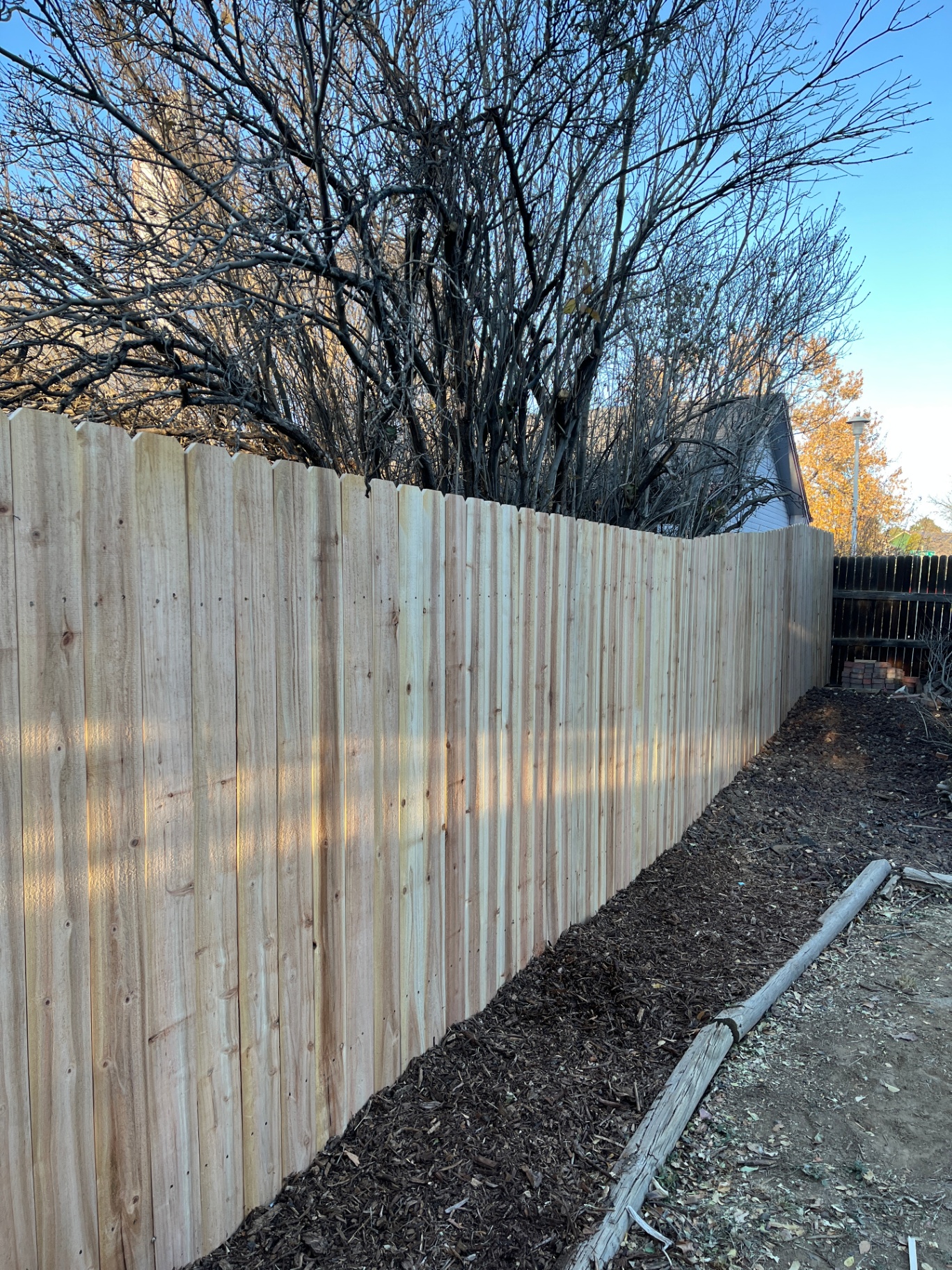
A fence is one of the simplest-looking projects we build and one of the most commonly done wrong. The difference between a fence that's still straight and solid in ten years and one that's leaning by year three almost always comes down to two things: how deep the posts are set and what they're set in. We install cedar, steel, and vinyl fencing across the Denver metro with posts set to frost depth in every case, because chinook winds and freeze-thaw cycles here are hard on anything set shallow.
Most of our fencing work is either full replacement of an aging wood fence that's leaning, rotted at the post line, or storm-damaged, or new installation for a property line, dog yard, or privacy screen. We survey the property line or work from an existing survey before we set a single post, because a fence built even a few inches over a line can turn into a neighbor dispute or a forced teardown.
We also check HOA covenants and city code before quoting — height limits, material restrictions, and setback requirements vary block to block in some of the older Denver metro neighborhoods, and we'd rather catch a conflict at the estimate stage than after posts are in the ground.
What is included
- Property line and code verification before installation
- Removal and haul-away of existing fence if applicable
- Frost-depth post footings
- Material, height, and gate layout consultation
- Panel, picket, or steel section installation
- Reinforced gate posts and hardware installation
- Final plumb and gate-function check
- Site cleanup and debris removal
What you get out of it
Frost-depth post footings
Posts set below the frost line so freeze-thaw cycles don't heave and loosen them over the first few winters.
Wind-rated construction
Post spacing, footing diameter, and panel design account for the sustained high winds common along the foothills and open plains areas of the metro.
Property line accuracy
We work from a survey or clearly marked pins, not guesswork, to avoid boundary disputes with neighbors.
Material options for every use case
Cedar for warmth and privacy, steel for security and low maintenance, vinyl for a clean look with minimal upkeep.
Straightforward replacement process
Old fence removal, haul-away, and new installation handled by one crew so there's no gap in coverage for pets or privacy.
How we run the job
- 01
Site visit and line verification
We confirm the property line location, check HOA and city rules on height and materials, and note any grade changes along the fence run.
- 02
Material and layout selection
You choose fence material, height, and gate locations; we lay out post spacing accordingly.
- 03
Removal of old fence
For replacements, we pull old posts and panels and haul away debris before new post holes are dug.
- 04
Post setting
Post holes are augured to frost depth, posts set plumb, and concrete or gravel backfill placed per the material spec.
- 05
Panel or picket installation
Rails and pickets, steel panels, or vinyl sections are installed once posts have set.
- 06
Gates and hardware
Gate posts get extra reinforcement given the added load and repeated stress of swinging hardware.
- 07
Final walkthrough
We check plumb, gate swing and latch function, and site cleanup before calling the job complete.
How long it takes
- Estimate and material selection
- Same week in most cases; longer if a survey needs to be pulled or ordered.
- Small residential fence (under 150 linear feet)
- 1–2 working days.
- Full property fencing
- 3–6 working days depending on linear footage and terrain.
- Concrete cure before gate use
- 24–48 hours before gates should see regular heavy use, though the fence itself is stable sooner.
What moves the price
- Linear footage
- The primary cost driver — most fence pricing scales directly with the total length of the run.
- Material choice
- Steel and vinyl typically cost more per linear foot than cedar up front, but require less ongoing maintenance.
- Terrain and grade changes
- Sloped yards require stepped or racked panel installation, which takes more layout time than a flat, level run.
- Old fence removal
- Replacing an existing fence adds demolition and haul-away cost compared to installing on a clear line.
- Gates and hardware
- Each gate adds reinforced posts and hardware cost, and larger drive gates cost more than standard walk gates.
- Height and privacy requirements
- Taller fences need larger posts and deeper footings to remain stable against wind load, adding to material and labor cost.
Specifications that hold up in Colorado
Cedar fencing
The most common choice for privacy fencing here; naturally resists rot and insects, and takes stain well, but needs re-staining every 2–3 years at altitude to prevent UV graying and checking.
Steel fencing
Ornamental steel or steel-framed panel fencing needs almost no maintenance beyond occasional touch-up paint and holds up well to wind loads; it's the common choice for security and pool code compliance.
Vinyl fencing
Low maintenance and consistent appearance over time, though in extreme cold vinyl can become more brittle and prone to cracking on impact compared to wood or steel.
Post material and setting
We typically set 4x4 or 6x6 pressure-treated posts, or steel posts for steel fence systems, in concrete footings sized to the fence height and local wind exposure — taller fences and more exposed sites get larger-diameter footings.
Colorado considerations
Frost depth for fence post footings runs 30–36 inches across most Front Range jurisdictions, and we hold to that standard even on short runs, because a shallow-set post is the number one reason fences lean within a few winters here.
Wind load is a bigger factor in Colorado than in most states — sustained winds along the foothills and open areas of the metro regularly exceed what a fence built to a generic national spec can handle, particularly with solid privacy panels that catch more wind than open picket styles.
UV degradation at altitude accelerates fading and checking on stained wood; we set expectations up front that cedar fencing needs a fresh coat of stain roughly every 2–3 years, not the longer intervals often quoted at lower elevations.
Most Denver metro cities and many HOAs cap fence height (commonly 6 feet in rear yards, lower in front yards) and require a minimum setback from the property line or public right-of-way; we confirm the applicable limits for your specific jurisdiction before finalizing the design.
Project photos
Fence Installation & Replacement FAQs
How deep do you set fence posts in Colorado?
We set posts to 30–36 inches depending on the jurisdiction's frost depth requirement. Posts set shallower than that are the most common reason fences start leaning after just a couple of winters here.
Do I need a permit to install a fence?
Many Front Range cities require a permit for fences over a certain height, and most HOAs require design or material approval regardless of city permit rules. We check both before quoting.
How do you handle property line disputes with neighbors?
We work from a survey or clearly marked property pins whenever possible, and we recommend confirming the line with your neighbor before installation, especially on older lots where boundaries aren't obvious.
How windy does it have to be before a privacy fence is at risk?
Solid privacy panels catch significant wind load, and in exposed locations along the foothills or open plains we increase post size and footing depth beyond the baseline standard to compensate.
Cedar, steel, or vinyl — what do you recommend?
It depends on priorities: cedar for a warmer look with a maintenance commitment, steel for security and durability with minimal upkeep, vinyl for low maintenance with less flexibility if it's damaged in a hailstorm or impact.
Can you match an existing fence style for a partial replacement?
In most cases yes, if the existing material is still available; cedar dimensions and steel panel styles are usually straightforward to match, though exact stain color match can vary with weathering on the existing sections.
Related services
Landscaping
Paver hardscape, xeriscape planting, and grading work engineered for clay soils and Front Range water rules.
Decks & Patios
Cedar and composite decks, paver patios, and covered structures engineered for Colorado snow load and UV exposure.
Retaining Walls
Segmental block, boulder, timber, and poured concrete retaining walls engineered for Front Range slopes and clay soils.
Start your fence installation & replacement project
Tell us what you are planning. We walk the site, talk through what it actually takes, and send a line-item estimate you can read.