
Colorado Landscaping: Xeriscape, Hardscape, and What Actually Survives
Denver metro landscaping fails for predictable reasons: thirsty plants chosen for a climate they weren't built for, irrigation designed without water-restriction schedules in mind, and hardscape that heaves the first winter. Here's what survives clay soil, hail, drought, and 300+ days of sun a year.
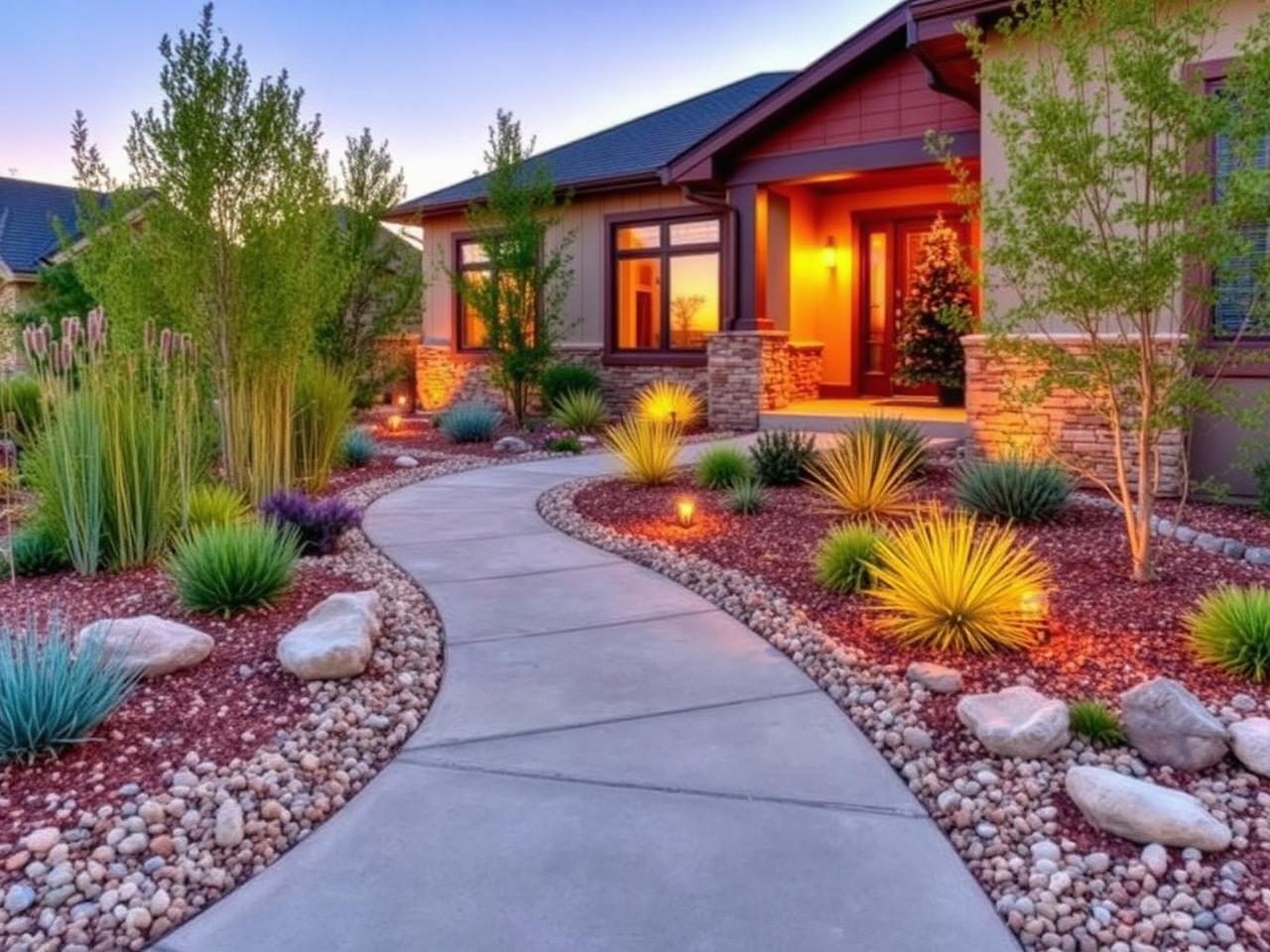
The climate you're actually landscaping for
Front Range Colorado gets around 15-17 inches of annual precipitation — roughly what parts of Arizona receive — but with dramatically more variability year to year, sudden hailstorms, and a growing season interrupted by late spring frosts and early fall freezes. Denver's average frost-free window runs from roughly early May to early October, but a hard freeze in mid-May or late September isn't unusual, and it can wipe out tender new plantings that would have been safe two weeks earlier or later.
Soil compounds the problem. Much of the Denver metro area sits on heavy clay, sometimes expansive clay that swells and shrinks dramatically with moisture changes. That clay holds water at the surface after rain but drains poorly at depth, which drowns plants that need well-drained soil and stresses foundations and hardscape if grading doesn't route water away properly.
Water restrictions and why xeriscape isn't optional anymore
Denver Water and most Front Range providers — Aurora Water, Highlands Ranch Metro District, Castle Rock Water — enforce summer watering schedules that typically limit irrigation to three days a week or fewer, with no watering during the hottest midday hours. These aren't emergency drought measures; they're standing policy in most years now, and landscape design should assume they're permanent, not seasonal.
Xeriscape doesn't mean gravel and a few yuccas. It means grouping plants by water need (hydrozoning), using drip irrigation instead of overhead spray on planting beds, and choosing turf alternatives for at least part of the yard. A well-designed xeriscape yard can use 50-60 percent less water than a traditional bluegrass lawn while still looking full and colorful most of the year.
- Hydrozone beds so high-water and low-water plants aren't on the same irrigation line
- Drip irrigation for shrub and perennial beds; spray heads only for actual turf areas
- Reduce bluegrass lawn footprint — it's the single biggest water user in most yards
- Add 2-3 inches of mulch to reduce evaporation and moderate soil temperature
Native and adapted plants that actually survive here
The plant list that consistently performs along the Front Range leans on species that evolved for or adapted to semi-arid, high-UV, clay-soil conditions. Ornamental grasses and native perennials tend to outperform imported nursery favorites that were bred for wetter, milder climates.
- Blue grama and buffalo grass — native, low-water turf alternatives that handle foot traffic
- Rabbitbrush and Gambel oak — tough native shrubs for slopes and screening
- Russian sage and catmint (Nepeta) — reliable, drought-tolerant color for full sun beds
- Little bluestem and 'Karl Foerster' feather reed grass — structure and movement, low water
- Penstemon (native species) and blanket flower — pollinator-friendly, heat and drought tolerant
- Colorado blue spruce and pinyon pine — adapted conifers, though spruce needs supplemental water in drought years
- Avoid: hydrangeas, hostas, and most turf-type fescue lawns without heavy irrigation commitment
Hardscape material comparison
Hardscape has to survive freeze-thaw cycling, which along the Front Range can happen more than 100 times a winter as daytime temperatures swing above freezing even in January. Materials and base preparation both matter more here than in milder climates.
| Material | Cost per sq ft (installed) | Freeze-thaw durability | Notes |
|---|---|---|---|
| Concrete pavers | $18 - $28 | Excellent with proper base | Wide color/pattern range, repairable |
| Natural flagstone | $22 - $35 | Very good | Local Colorado buff/red flagstone common |
| Poured concrete | $10 - $16 | Fair — prone to cracking | Needs control joints, rebar in clay soils |
| Decomposed granite | $6 - $10 | Good, needs periodic refresh | Low-cost pathway/patio filler |
| Loose gravel/rock mulch | $4 - $8 | Excellent | Best for xeriscape beds, not walkways |
Why base preparation matters more here than anywhere
A paver patio or flagstone walkway installed without proper base prep is one of the most common landscaping failures we get called to fix in Front Range yards. Expansive clay soil needs to be excavated well below the finished grade and replaced with a compacted road base — typically 6 to 8 inches for patios and pathways, more under areas that will see vehicle weight.
Skipping geotextile fabric between the clay subgrade and the base material lets fines migrate up into the base over a few freeze-thaw cycles, which is exactly what causes pavers to heave, settle unevenly, and develop the wavy, uneven surface you sometimes see in yards just a few years after installation.
- Excavate 8-10 inches below finished grade for patios in clay soil
- Geotextile fabric separates clay subgrade from compacted base material
- Compact base in 2-inch lifts with a plate compactor, not all at once
- Slope hardscape at least 1/4" per foot away from the house for drainage
HOA and municipal rules that affect landscaping
Many Front Range HOAs — particularly in Highlands Ranch, Castle Rock, and Parker communities — have design review requirements for anything beyond routine plant replacement, including retaining walls, fence lines, tree removal, and sometimes even rock bed conversions from turf. Some HOAs still have minimum turf percentage requirements left over from pre-drought-era covenants, which can conflict with water-wise landscaping goals; these are increasingly being revised, but it's worth checking before ripping out a lawn.
Municipal rules layer on top: most Front Range cities require permits for retaining walls over 4 feet tall, and some regulate impervious surface coverage, which affects how much patio or hardscape you can add without triggering stormwater management requirements.
- Check HOA covenants before removing turf or building retaining walls
- Retaining walls over 4 ft generally require a permit and often an engineer stamp
- Impervious surface limits can cap total patio/driveway coverage on a lot
- Tree removal, especially of mature trees, may require city notification in some jurisdictions
Realistic cost ranges for a landscape renovation
A full front-yard xeriscape conversion — removing turf, regrading, adding drip irrigation, planting beds, and mulch — typically runs $8,000 to $18,000 for an average Front Range lot, depending on square footage and whether an irrigation system already exists. Adding a paver patio, retaining wall, or significant hardscape pushes a full backyard project into the $25,000 to $60,000+ range depending on scope.
Irrigation conversion from spray to drip for existing beds runs $3-$6 per linear foot of bed edge, and is often the highest-value single upgrade for reducing water bills without sacrificing plant health.
A realistic year-round maintenance schedule
Xeriscape and native plantings reduce maintenance but don't eliminate it, especially in the first two years while root systems establish.
- Spring: cut back ornamental grasses before new growth, check irrigation lines for winter cracks
- Late spring: watch for last frost date (early May average) before planting tender perennials
- Summer: deep, infrequent watering on drip zones per the current watering schedule
- Fall: reduce watering frequency as temperatures drop, mulch beds before first hard freeze
- Winter: occasional deep watering during dry spells (once a month) to protect root systems
- Every 2-3 years: refresh mulch depth and inspect drip emitters for clogging from mineral-heavy water