
Excavation and Site Work in Colorado: What Homeowners Should Know
Excavation looks simple from the sidewalk — a machine moves dirt — but along Colorado's Front Range the ground itself is the hardest part of the job. Expansive clay, buried cobble, frost depth, and a short dry-work season all shape what a project costs and how long it takes. Here's what to expect before you break ground.
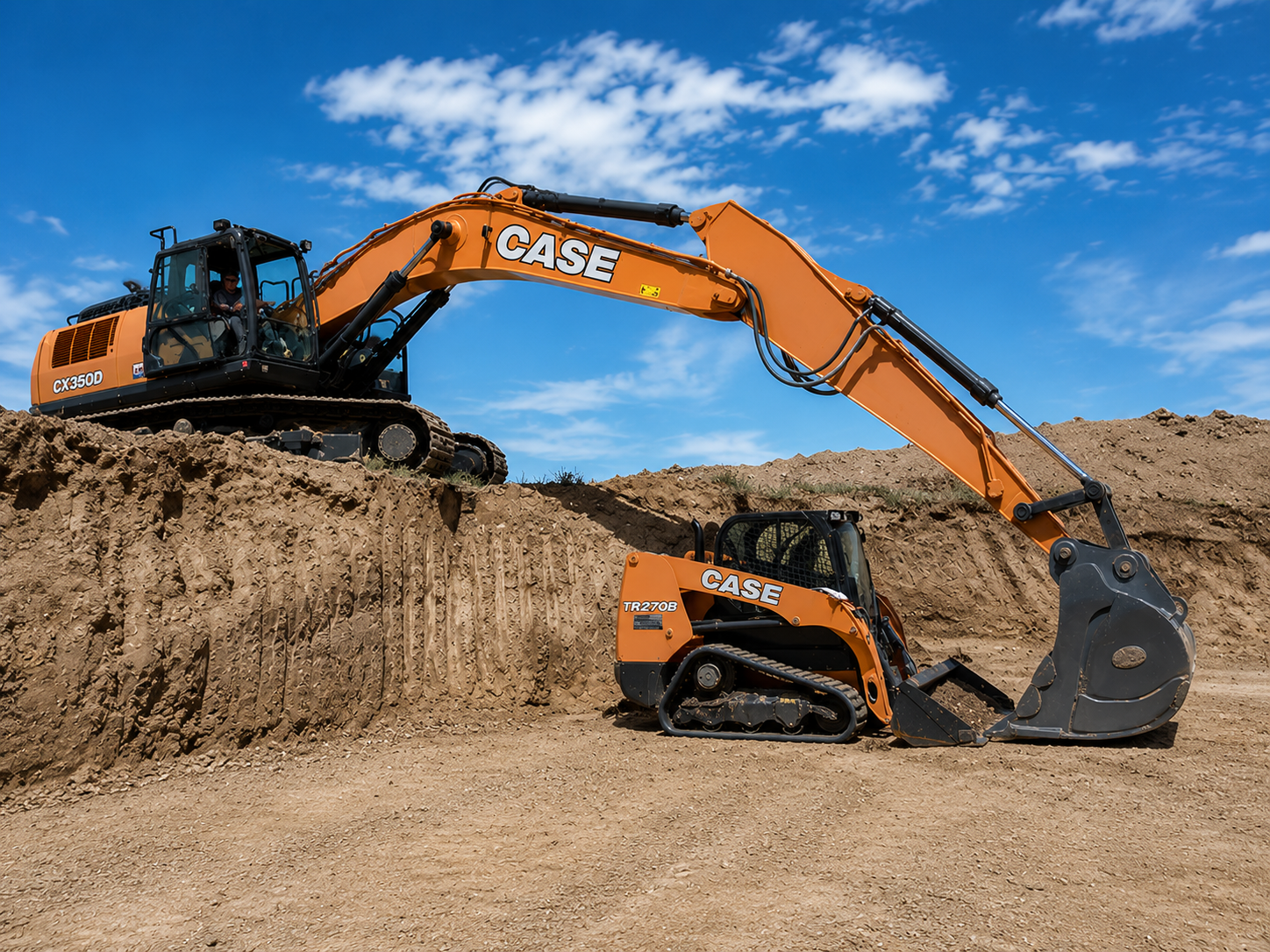
Why Colorado soil complicates every dig
Much of the Denver metro area, including Littleton, Highlands Ranch, Castle Rock, and Aurora, sits on Denver Blue clay and other bentonite-bearing formations. These clays are expansive: they absorb water and swell, then dry out and shrink, sometimes moving several inches through a wet spring and dry summer. A foundation or slab poured without accounting for this movement can crack within a few years.
Beneath the clay, many lots along the foothills and in older river-terrace neighborhoods hit dense cobble and boulder layers left behind by ancient stream channels. This material doesn't dig like soil — it often requires hoe-ramming or a larger excavator with a thumb attachment to break loose, which changes both timeline and price mid-project.
Because of this variability, a soils report from a geotechnical engineer isn't a formality on foundation, addition, or retaining wall projects — it's the document that tells your excavation contractor and structural engineer what they're actually working with before equipment ever shows up.
Frost depth and why it dictates footing dig depth
Most Front Range jurisdictions require footings to bear below the frost line to prevent frost heave from lifting and cracking foundations over winter. In the Denver metro area that's typically 30 to 36 inches, though mountain communities and higher-elevation towns along the I-70 corridor can require deeper footings — sometimes 42 inches or more.
This is a lot to dig, and it means excavation contractors need to plan for stable trench walls, especially in loose fill or sandy pockets. Trenches deeper than 5 feet fall under OSHA excavation safety rules requiring shoring, sloping, or a trench box, which adds cost but is not optional.
Seasonal timing: mud season, monsoon, and frozen ground
Colorado's excavation season is shorter than it looks on a calendar. Late winter and early spring bring saturated, unstable clay from snowmelt — heavy equipment can rut a yard badly or get stuck outright. Late July through August often brings the North American monsoon, with intense afternoon downpours that can flood an open excavation in under an hour if it isn't graded to drain.
Winter digging is possible but slower: frozen ground in the top 6 to 12 inches needs to be broken through before normal excavation can proceed, and concrete work that follows needs cold-weather protection (blankets, heated enclosures, or accelerated mix) to cure properly.
Most experienced Front Range contractors schedule major dirt work for May through October, working around the wettest weeks of the monsoon when possible and keeping an eye on the Denver-area frost date, typically early-to-mid October.
Permits, utility locates, and grading rules
Nearly every Front Range jurisdiction — Littleton, Denver, Jefferson County, Douglas County, Arapahoe County — requires a grading and drainage plan for excavation that alters more than a modest volume of soil or changes how water sheds off the lot. The threshold varies by city, but any project disturbing more than roughly 50 cubic yards, or that's within a certain distance of a property line or easement, typically needs a permit and often an engineered drainage plan stamped by a professional engineer.
Before any shovel or bucket touches the ground, Colorado law requires a call to 811 (Colorado 811) for utility locates, with a minimum two-business-day notice. Skipping this step risks striking gas, electric, or fiber lines and carries real liability, not just inconvenience.
If the lot backs to open space, a drainage easement, or is in a floodplain overlay, expect additional review from the county or city stormwater department, and possibly HOA design review on top of that.
- Call 811 at least two business days before digging — locates are free and required by law
- Grading and drainage permits are typically required above ~50 cubic yards of cut/fill
- Erosion and sediment control (silt fence, inlet protection) is required on most active sites
- HOA architectural review often runs concurrently with, not instead of, city permitting
Compaction testing: the step that protects your investment
Any time soil is removed and replaced — a basement dig, a driveway subgrade, a footing trench backfill — it has to be compacted back to a specified density, usually expressed as a percentage of Standard or Modified Proctor density (commonly 95% for structural fill in Colorado). An independent geotechnical testing firm takes nuclear density or sand-cone readings in lifts (layers), typically every 8 to 12 inches, and issues a report.
Skipping compaction testing is one of the most common ways homeowners end up with a settling patio, a cracked driveway apron, or a foundation that shifts. The test itself usually costs a few hundred dollars per visit but is inexpensive insurance against a five-figure repair.
Typical excavation project costs in the Denver metro area
Costs vary widely with soil type, access, depth, and how far spoils have to be hauled. The ranges below reflect typical Front Range pricing as of early 2026 for straightforward residential access; tight urban lots, steep grades, or rock-heavy digs run higher.
| Project type | Typical range | Key cost drivers |
|---|---|---|
| Basement/foundation excavation (avg. lot) | $4,500 – $14,000 | Depth, soil type, spoil hauling, shoring |
| Utility trenching (per linear foot) | $18 – $45 | Depth, rock/cobble, existing landscaping |
| Grading and drainage correction | $2,500 – $9,000 | Lot size, drainage complexity, permit needs |
| Driveway/pad subgrade prep | $3 – $7 per sq ft | Compaction spec, base rock depth, access |
| Site clearing (brush, small trees) | $1,500 – $6,000 | Lot size, tree removal, debris hauling |
Decomposed granite and native rock: material, not just obstacle
In the foothills and much of unincorporated Jefferson County, decomposed granite (DG) is both a soil condition and a useful material. As a subgrade, it drains well and compacts predictably, which is good news for footings and pathways. As a surface material, crushed and screened DG is commonly used for informal patios, garden paths, and low-traffic parking areas because it's inexpensive, permeable, and blends with the native landscape.
The tradeoff is erosion: loose DG on a slope will migrate downhill in a heavy monsoon storm without edging or a stabilizer additive. A contractor familiar with foothill lots will typically recommend a compacted base with a resin or polymer stabilizer for any DG surface on a grade over roughly 3%.
What a homeowner should ask before hiring an excavation contractor
Excavation is one of those trades where problems discovered mid-project are expensive to fix after the fact. A short round of questions up front avoids most surprises.
- Has a geotechnical soils report been done, and has the contractor read it?
- Who is responsible for calling 811 and scheduling utility locates?
- Is the grading and drainage permit included in the contract, or is it the homeowner's responsibility?
- How will spoils be hauled and where, and is that cost included or billed separately?
- What happens if unexpected rock, groundwater, or contaminated soil is encountered?
- Will compaction testing be performed, and by whom, with reports provided to the homeowner?
Groundwater and spring seepage
Along the South Platte River corridor and in low-lying parts of Littleton, Englewood, and Sheridan, seasonal groundwater can sit closer to the surface than homeowners expect, especially after a heavy snowpack year. Excavating a basement or deep footing in these areas sometimes requires dewatering — temporary well points or sump pumping — to keep the excavation workable and to protect the eventual foundation from hydrostatic pressure.
A soils report will usually note the observed groundwater depth at the time of drilling, but because it fluctuates seasonally, it's worth asking your geotechnical engineer whether the reported depth represents a high-water or low-water condition.